
Most medical websites are not ready for AI search, and this represents a fundamental shift in how patients find healthcare information. The problem extends far beyond traditional SEO optimization: it's about AI systems actively replacing search engines as the first stop for patient queries. If your medical website isn't optimized for how AI actually works, you're becoming invisible to patients who are bypassing Google entirely.
The Seismic Shift from Search Engines to AI
The transformation happening in healthcare search isn't merely an evolution; it's a disruption. Large language models (LLMs) can now generate synthesized answers to patient queries without directing users to specific websites. When a patient asks an AI tool about "top orthopedic surgeons in California," they might receive a complete answer without ever visiting a clinic website.
This shift impacts medical practices profoundly because patients increasingly turn to AI-driven tools for quick, conversational answers on symptoms, treatments, and clinic recommendations. The outcome is an entirely new ecosystem where success hinges on visibility in AI outputs, not just search engine results pages.
Industry forecasts suggest AI-mediated searches could dominate by 2026, potentially reducing website traffic significantly unless clinics optimize accordingly. That's not a distant future: that's next year.
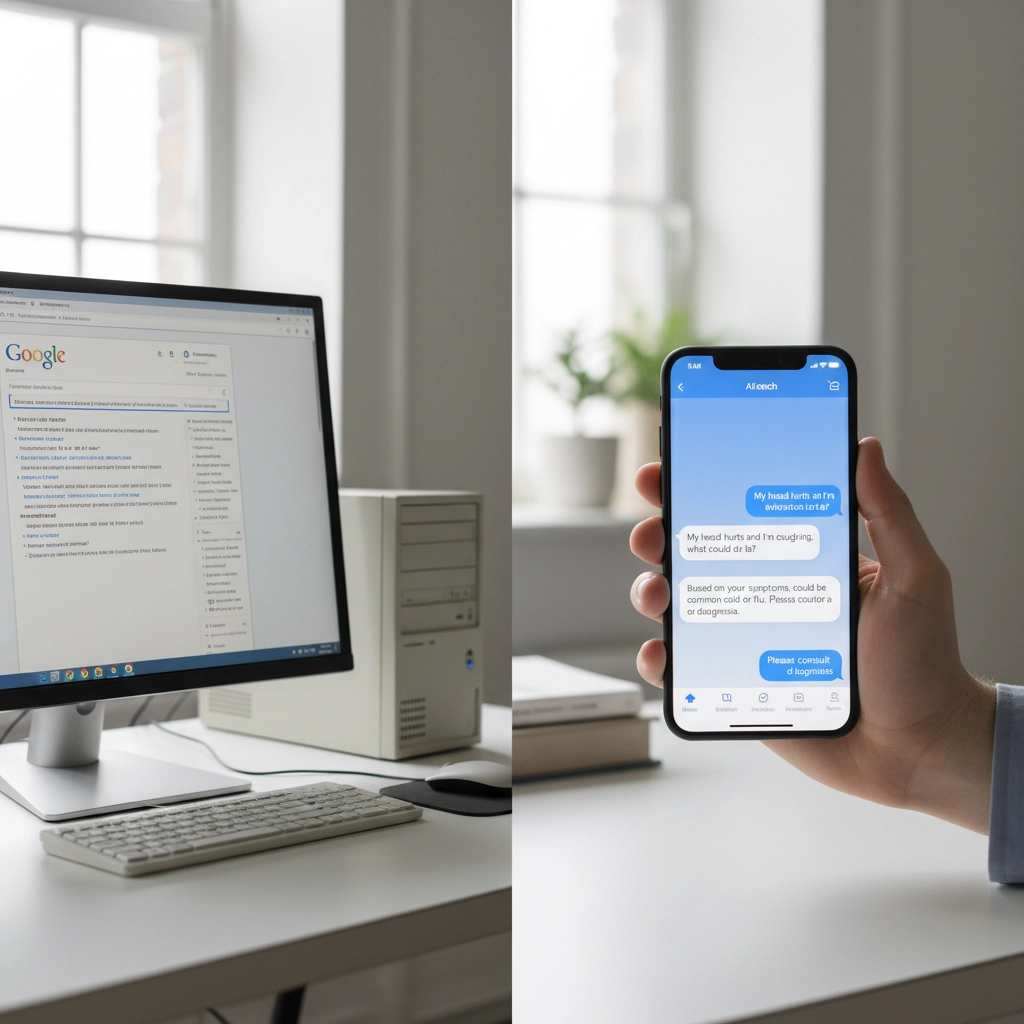
What's Broken with Traditional Medical Websites
Most healthcare websites were built for search engines, not for AI systems. Here's what's failing:
Focus on compliance instead of clarity – Websites prioritize regulatory requirements over patient understanding. Your legal team might love all that fine print, but AI systems can't make sense of it.
Outdated designs and structures – Old web architecture that AI systems struggle to parse. If your website looks like it's from 2015, AI probably thinks your practice information is from 2015 too.
Failure to answer actual patient questions – Content doesn't align with how patients search through conversational AI. People ask AI "What should I expect during knee surgery?" not "orthopedic surgical procedures methodology."
Lack of structured data – No schema markup or metadata to help AI understand your services. This is like having a brilliant conversation in a language the other person doesn't speak.
Absence of ongoing trust-building content – Limited content that demonstrates authority and expertise beyond basic service pages.
Even worse, if you don't actively control what AI says about your organization, it will get it wrong: or leave you out entirely. AI systems confidently provide outdated provider names, wrong specialties, and even closed locations when asked about healthcare facilities.
The Critical Infrastructure Changes Required
Structured Data and Schema Implementation
AI doesn't read websites the way humans do. It needs backend enhancements like schema markup and structured data to properly index and surface your content. This means implementing technical SEO that specifically tells AI systems what your services are, where you're located, your specialties, and your qualifications.
Think of structured data as a translation layer between your website and AI systems. Without it, even the best content might be invisible to AI.

Medical Content Accuracy and Authority
While AI tools can generate basic content, they cannot ensure medical accuracy, patient relevance, or HIPAA compliance. Human expertise is essential. The best strategy combines AI assistance with human verification: AI generates content like meta descriptions and initial drafts, which medical professionals then verify and optimize.
This hybrid approach balances speed with credibility. Google's algorithms reward high-quality, useful content created by AI and then optimized by human professionals like medical content writers.
E-A-T Compliance for Medical Content
Medical content falls under "Your Money or Your Life" (YMYL) classification and receives stricter scrutiny from AI systems. Your website must demonstrate expertise, authoritativeness, and trustworthiness. This means clearly displaying provider credentials, certifications, and proven clinical experience.
AI systems prioritize content from authoritative sources because misinformation in healthcare can have serious consequences. If your "About Us" page looks like it was written by a marketing intern, AI won't trust your medical advice either.
Patient-Centered Messaging
AI systems evaluate content based on intent alignment. Your website must translate complex medical services into language that patients (and AI) actually understand. This isn't dumbing down content: it's answering the specific questions patients ask AI systems.
Strategic content should address conditions, treatments, locations, and timelines in conversational language that matches how people search through AI. Instead of "We provide comprehensive cardiovascular interventional procedures," try "We help patients with heart problems through minimally invasive treatments that get you back home faster."

The Technical Foundations AI Demands
Several technical factors determine whether AI systems will recognize and feature your medical website:
Page Speed – Fast-loading websites provide better experiences and are favored by AI algorithms. If your site takes 8 seconds to load, AI systems assume your practice runs the same way.
Mobile-First Design – Websites optimized for mobile devices are indexed first, reflecting modern patient behavior. Most patients are searching for healthcare on their phones, not desktop computers.
HTTPS Security – Encrypted traffic builds trust and is a ranking factor for AI evaluation. This is table stakes in 2025.
Structured Data Implementation – Schema markup helps AI understand and display content in rich results, including star ratings, contact information, and service details. This is what makes your practice show up with all the right information when AI provides recommendations.
What Google Won't Tell You: The Real Competition
Here's the uncomfortable truth: Google confirmed that AI won't replace the need for SEO, but what they mean is different from what most healthcare organizations think. Google's own search is evolving to include AI-generated overviews, but the real threat comes from alternative AI tools: ChatGPT, Claude, Perplexity, and specialized health AI systems: that patients increasingly use instead of Google.
These platforms aren't necessarily using Google's ranking signals. They're creating their own understanding of authoritative healthcare sources.
The shift also reflects changing user behavior. Patients no longer want to click through 10 links; they want instant answers. This means your visibility isn't about ranking first on page one anymore: it's about being the authoritative source that AI systems synthesize and cite.
Another hidden challenge: AI monitoring and optimization is ongoing work. What AI systems say about your practice changes as algorithms evolve and as your online presence develops. This requires continuous refinement of your site and content rather than one-time optimization.
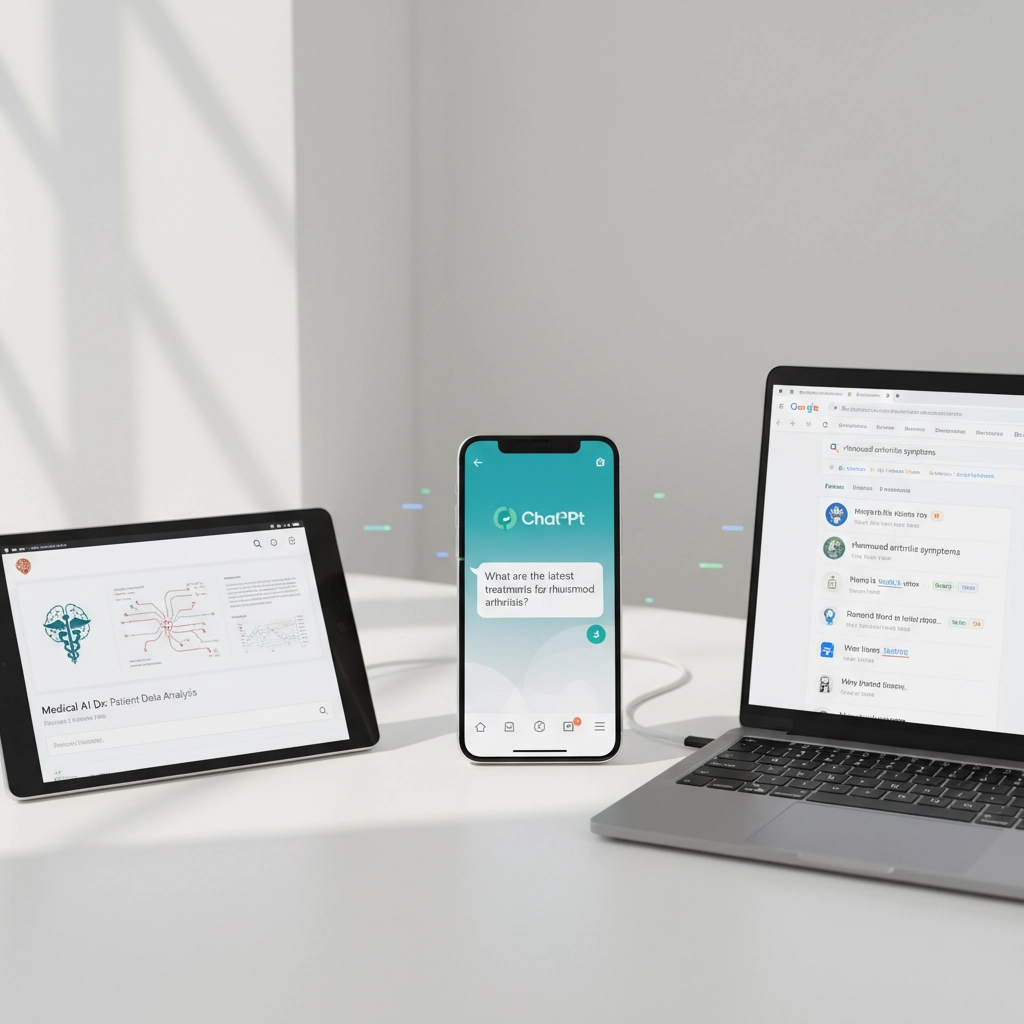
The Path Forward: A Hybrid Strategy
Medical practices need to blend human-focused and AI-optimized strategies simultaneously. Here's what that looks like:
SEO expertise remains essential – Professional SEO experts understand how to combine AI tools strategically with human insight to achieve better results. They ensure technical SEO, content, and local SEO efforts are properly aligned.
Content strategy shifts to intent – Success hinges on understanding what patients actually ask AI systems and building content around those real questions, not keyword rankings.
Reputation management evolves – AI pulls from your reviews, listings, and online presence, so managing this ecosystem becomes critical. One bad review on a platform AI trusts can tank your visibility.
Emerging trends matter – Voice search optimization, AI chatbots, and personalized content recommendations are no longer optional features.
The uncomfortable truth: your medical website's readiness for AI search depends less on what Google tells you and more on whether your actual clinical expertise, patient-centered messaging, and technical infrastructure align with how AI systems evaluate trustworthiness and relevance.
If you're still optimizing for 2020's version of Google search, you're already behind. The question isn't whether AI will change healthcare marketing: it's whether you'll adapt before your competitors do.
The good news? Most medical websites aren't ready either. The practices that move first will have a significant advantage in capturing patients who increasingly rely on AI for healthcare decisions. The time to act is now, before AI search becomes the standard and catching up becomes exponentially harder.
